
What Are the Commercial Kitchen Requirements in DFW, Texas?
Commercial kitchens in the Dallas-Fort Worth area must comply with applicable Texas food safety regulations, local permitting requirements, health inspections, and facility standards. Most regulated food businesses need an approved production location and appropriate permits before operating. Requirements vary by business type, municipality, and food preparation activities, so operators should verify regulations with the authority overseeing their specific location.
Opening a food business involves more than finding a kitchen and perfecting a menu. Entrepreneurs also need to understand the rules governing where food can be prepared, how it must be handled, and which approvals are necessary before serving customers.
At The Cookline, we work with food entrepreneurs looking for professional commercial kitchen rental options in Carrollton and Plano, TX. Whether you’re launching a catering company, expanding a bakery, operating a food truck, or building a delivery-focused ghost kitchen, having access to suitable production space is an important part of your business plan.
Our goal is to make professional kitchen space more accessible while helping entrepreneurs understand the practical considerations of operating a growing food business. Knowing which regulations apply before signing a kitchen rental agreement can save time, prevent unexpected expenses, and help you launch with greater confidence.
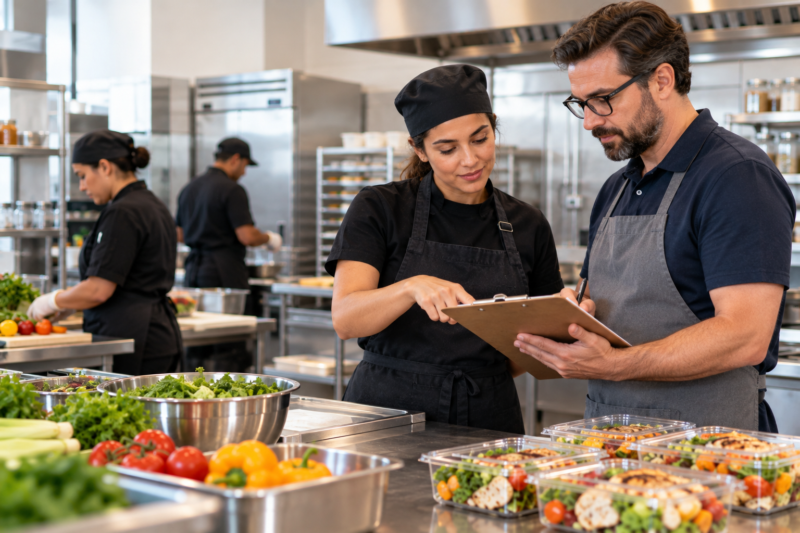
Texas Commercial Kitchen Licensing, Health Inspections, and Food Safety Rules
Commercial kitchen regulations in DFW involve both statewide standards and requirements administered by the appropriate regulatory authority.
Understanding how these rules apply to your business is the first step toward selecting a suitable kitchen and preparing for inspections.
1. What Permits Are Required to Operate a Commercial Kitchen in DFW?
Most regulated retail food businesses need a food establishment permit or other applicable authorization before beginning operations.
The Texas Department of State Health Services (DSHS) oversees retail food establishments in areas without a local permitting and inspection authority. In many DFW municipalities, local departments administer the applicable food establishment requirements.
Depending on your business model, you may need:
- Food establishment authorization: For qualifying retail food preparation and service activities.
- Food manager certification: For operations required to have a certified food protection manager.
- Food handler training: For employees who handle food and fall within applicable training requirements.
- Food manufacturing licenses: For certain packaged food production, processing, or wholesale activities.
- Building and fire approvals: When required for the facility or proposed use.
According to Texas DSHS, retail food establishments under its jurisdiction generally must obtain a valid permit unless an exemption applies.
Before beginning operations, identify which agency regulates your food business and ask whether your planned activities require separate approvals.
2. What Health and Safety Standards Must Commercial Kitchens Meet?
Commercial kitchens must meet applicable standards for sanitation, food handling, temperature control, equipment, and facility conditions.
Texas uses the Texas Food Establishment Rules (TFER) to establish food safety requirements for regulated retail operations. These rules address conditions that can contribute to foodborne illness and unsafe food preparation.
Important compliance areas include:
- Food temperature control: Proper cooking, cooling, reheating, refrigeration, and holding procedures.
- Handwashing facilities: Appropriate access to handwashing stations and necessary supplies.
- Cleaning and sanitizing: Approved methods for maintaining food-contact surfaces and equipment.
- Food storage: Procedures that protect ingredients and finished products from contamination.
- Pest prevention: Facility maintenance and practices that reduce pest activity.
- Employee hygiene: Food handling, illness reporting, and personal cleanliness requirements.
According to Texas DSHS, time/temperature control for safety (TCS) foods require appropriate controls to limit harmful microorganism growth or toxin formation.
Food entrepreneurs should establish clear procedures for these activities before increasing production or adding employees.
3. How Do Commercial Kitchen Regulations Differ Between Carrollton and Plano?
Commercial kitchen operators in Carrollton and Plano must follow applicable Texas food safety standards, but permitting procedures and local administrative requirements can differ.
For example, the City of Carrollton identifies several food establishment classifications based on the type and extent of food preparation.
Carrollton food establishment permit fees, effective January 1, 2026
| Permit classification | Published fee |
|---|---|
| Heavy food establishment | $450 |
| Light food establishment | $370 |
| No food preparation | $250 |
| Retail food store | $770 |
Source: City of Carrollton, Food Business Permits & Requirements. These are published establishment fees, not necessarily the fees applicable to an individual shared-kitchen tenant.
Carrollton also describes an approval process that includes building-related requirements, fire inspection, and a food establishment inspection before opening.
Plano businesses should independently confirm their current permit classifications, application procedures, fees, and inspection requirements with the City of Plano’s responsible department.
Why does this matter? A business approved for one location or operating model should not assume those approvals automatically apply to a different municipality or facility.
The Cookline has commercial kitchen locations in both Carrollton and Plano, giving food entrepreneurs options when considering where to establish their operations.
4. Can You Legally Operate a Ghost Kitchen or Food Truck From a Shared Commercial Kitchen?
Yes, ghost kitchens and food truck businesses can use shared commercial kitchens when the facility and the business’s activities meet applicable regulatory requirements.
A ghost kitchen typically prepares meals for delivery or pickup without operating a traditional dine-in restaurant. Although the customer experience differs from a conventional restaurant, applicable food preparation and safety requirements still apply.
Food truck operators may also use approved commissary or commercial kitchen facilities to support their operations.
Before renting space, confirm:
- Whether the kitchen is approved for your intended food preparation activities.
- Whether your business needs its own permit or license.
- Whether the facility meets any applicable commissary requirements.
- Whether your proposed food storage and preparation arrangements are permitted.
- Whether your delivery, mobile vending, or wholesale activities require additional approvals.
One important 2026 update affects mobile vendors. Effective July 1, 2026, Texas shifted annual mobile food vendor permitting and inspection authority to DSHS. Carrollton confirms that it no longer issues annual mobile food vendor permits, although applicable local zoning and ordinance requirements still apply.
For ghost kitchen and food truck entrepreneurs, reviewing these requirements early can help avoid delays.
5. What Should You Check Before Renting a Commercial Kitchen?
Before signing a commercial kitchen rental agreement, verify that the space supports your specific production activities and regulatory obligations.
Not every commercial kitchen offers the same layout, equipment, storage arrangements, or permitted uses.
Ask the kitchen provider about:
- Approved uses: Is the facility suitable for catering, baking, meal preparation, food manufacturing, or delivery-focused operations?
- Permitting responsibilities: Which approvals apply to the facility, and which must be obtained by your business?
- Inspection procedures: What documentation or access may be needed for inspections?
- Production requirements: Can the space accommodate your expected food preparation workflow?
- Storage arrangements: Are appropriate storage options available for your ingredients and finished products?
- Rental flexibility: Does the arrangement make sense for your production schedule and growth plans?
The Cookline provides shared commercial kitchen rental opportunities for entrepreneurs seeking professional production space in Carrollton and Plano.
Because facility features and arrangements can differ between locations, discussing your business’s specific needs before renting is the best way to determine which option may be suitable.
Frequently Asked Questions About DFW Commercial Kitchen Regulations
Do I need a permit to rent a commercial kitchen in Texas?
Renting kitchen space does not always require a separate permit by itself, but operating a regulated food business generally requires applicable authorization. Confirm your obligations with the agency responsible for your activities.
Can I prepare food at home and sell it through a restaurant or delivery service?
Texas cottage food laws permit certain home-produced foods under specific conditions. Other food preparation and distribution activities may require a regulated commercial facility. Check current DSHS guidance for your products and sales model.
Are commercial kitchens inspected in Texas?
Yes. Regulated food establishments are subject to inspections by the appropriate state or local authority. Inspection requirements and frequency depend on the operation and jurisdiction.
Does renting a shared kitchen automatically make my food business compliant?
No. A shared kitchen can provide an appropriate production environment, but each operator must still comply with applicable licensing, training, food safety, labeling, and operational requirements.
Find the Right Commercial Kitchen for Your Food Business
Understanding commercial kitchen regulations is an important step toward building a successful food business in DFW. From permits and inspections to food handling requirements, preparing early helps you make informed decisions and avoid unnecessary obstacles.
Looking for commercial kitchen rental space in Carrollton or Plano, TX?
Contact us today to explore your options and find a professional kitchen environment that fits your business goals.