
What Is the Best Way to Organize Holiday Pie and Dessert Production in a Shared Kitchen?
The best way to organize holiday pie and dessert production in a shared commercial kitchen is to group similar recipes, schedule baking in batches, prepare ingredients ahead of time, and coordinate cooling, storage, and packaging. A detailed production plan helps bakers manage large holiday orders, maintain consistent quality, reduce wasted kitchen time, and meet customer pickup deadlines.
The holiday season brings exciting opportunities for bakeries, dessert businesses, and independent food entrepreneurs. From Thanksgiving pumpkin pies and pecan pies to Christmas cookies, cakes, and specialty desserts, customer demand can quickly exceed the capacity of a small kitchen. Preparing dozens or hundreds of baked goods requires careful organization, reliable equipment, and enough workspace to maintain consistent results.
At The Cookline, we help food entrepreneurs find professional commercial kitchen space that supports their production needs. With shared kitchen rental options in Carrollton and Plano, TX, bakers can prepare holiday orders without investing in their own commercial facility. Our flexible kitchen rental model gives growing dessert businesses an alternative to expensive restaurant leases while providing access to professional food preparation environments.
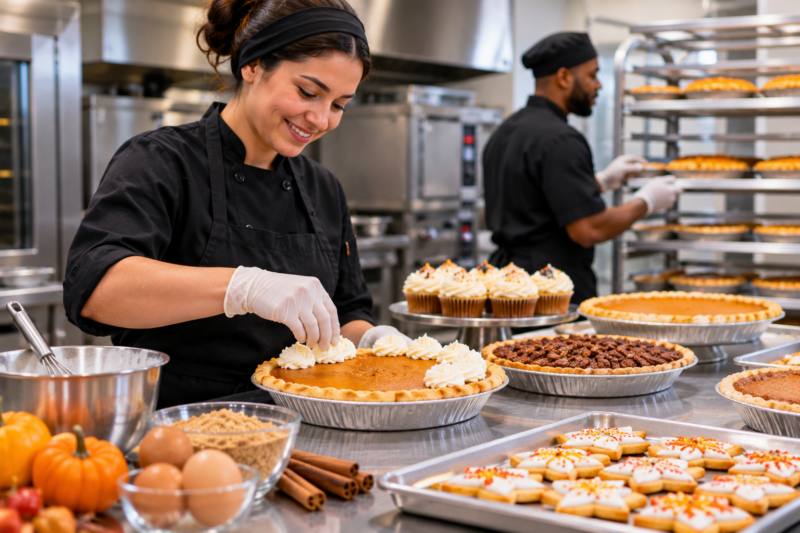
Holiday Baking Production Planning for Commercial Kitchens
How Should Bakers Organize Large Holiday Dessert Orders?
The most effective way to organize holiday dessert orders is to create a master production list that groups products by recipe, preparation requirements, and customer deadlines.
Instead of completing each order individually, bakers can prepare similar desserts together to reduce repeated setup and cleanup.
For example, a bakery receiving orders for 40 pumpkin pies, 30 pecan pies, and 20 apple pies could organize production into separate stages for crust preparation, filling preparation, baking, cooling, and packaging.
A holiday baking production plan should include:
- Total quantities: Record how many of each dessert must be prepared.
- Ingredient requirements: Calculate the ingredients needed for the complete production run.
- Equipment needs: Identify the ovens, mixers, baking pans, and preparation surfaces required.
- Production time: Estimate preparation, baking, cooling, decorating, and packaging hours.
- Customer deadlines: Organize finished products according to scheduled pickup or delivery times.
This system helps prevent missed orders and reduces confusion when multiple customers request similar desserts.
For growing food businesses, a master production schedule can also reveal whether additional commercial kitchen rental time is needed.
What Is the Most Efficient Way to Schedule Commercial Oven Time?
Commercial oven time should be scheduled according to baking temperature, recipe requirements, and batch size.
One common challenge during holiday dessert production is managing several recipes that require different temperatures and baking times. Constantly changing oven settings can interrupt production and make it harder to maintain consistent results.
To improve efficiency, consider these strategies:
- Group recipes by temperature. Bake products with similar temperature requirements during the same production period when appropriate.
- Prepare the next batch early. Have ingredients and pans ready before the current batch finishes.
- Track baking times carefully. Use a production log to record when each batch enters and leaves the oven.
- Avoid overcrowding. Follow equipment capacity guidelines to promote even baking.
- Allow cooling time. Include sufficient time for desserts to cool safely before packaging or decorating.
For example, a baker preparing several varieties of holiday cookies might complete all batches requiring the same oven temperature before switching to another recipe.
Before renting a shared commercial kitchen, confirm which ovens and equipment are available at the specific location.
The Cookline offers professional commercial kitchen rental options in Carrollton and Plano, with amenities that vary by facility. Discussing your production requirements in advance can help you select the location that best fits your holiday baking needs.
How Can Bakers Prepare Holiday Desserts Ahead of Time Without Sacrificing Quality?
Preparing certain components ahead of time can reduce the workload during the busiest holiday production days. However, bakers must consider food safety, freshness, and the storage requirements of each dessert.
Some recipes allow for advance preparation of dough, crusts, or other components. Others may require baking or decorating closer to the customer’s pickup date.
A practical approach includes:
- Prepare suitable cookie dough or pie crusts ahead of time using tested storage procedures.
- Measure dry ingredients in advance to reduce preparation time.
- Schedule delicate decorations and finishing touches closer to delivery.
- Use clearly labeled containers to keep ingredients and finished products organized.
- Test how refrigeration or freezing affects the texture and appearance of each dessert.
According to FoodSafety.gov, baked pumpkin and pecan pies can generally be refrigerated for three to four days at 40°F or below. Custard and chiffon pies also have a recommended refrigerated storage period of three to four days.
These guidelines provide useful planning information, but commercial bakers must also follow applicable Texas food safety regulations and any requirements specific to their products.
Advance preparation should never compromise safe cooling, storage, or transportation practices.
How Should Holiday Desserts Be Packaged and Organized for Customer Pickup?
Holiday desserts should be packaged according to their size, temperature requirements, and transportation needs, then organized by customer order and pickup time.
Packaging is especially important during Thanksgiving and Christmas, when customers may be transporting desserts to family gatherings, office celebrations, or holiday parties.
A packaging checklist should include:
- Select sturdy containers that protect desserts during transportation.
- Use food-safe packaging appropriate for each product.
- Clearly identify each customer’s order.
- Include ingredient and allergen information when required.
- Add appropriate storage and handling instructions.
- Verify order quantities before pickup or delivery.
For example, a customer ordering three pumpkin pies and two dozen decorated cookies should receive clearly identified packages that match the original order.
Separating finished products by customer can help prevent last-minute mistakes.
The Cookline also offers a dedicated packaging room as part of its commercial kitchen rental services. Food entrepreneurs interested in using this space should confirm availability and suitability for their specific packaging activities.
Why Should Holiday Bakers Consider Renting a Shared Commercial Kitchen?
A shared commercial kitchen can help growing dessert businesses increase production capacity without taking on the expenses associated with building and maintaining a private commercial facility.
For bakers who experience significant seasonal demand, this flexibility can be particularly valuable.
Benefits may include:
- Professional production space: Work in a commercial kitchen designed for food preparation.
- Flexible scheduling: Reserve kitchen time around production needs and customer orders.
- Reduced long-term commitments: Avoid immediately investing in a permanent kitchen lease and buildout.
- Business growth opportunities: Test larger production volumes before making major expansion decisions.
- Dedicated work environment: Separate commercial baking operations from home activities.
The Cookline offers hourly commercial kitchen rental with 24/7 facility access for scheduled kitchen sessions, giving bakers flexibility when planning early-morning or late-night production.
For businesses preparing Thanksgiving pies, Christmas cookies, or seasonal dessert collections, this scheduling flexibility can help accommodate busy production periods.
However, bakers should always verify kitchen availability, equipment, and storage arrangements before accepting orders that depend on those resources.
Frequently Asked Questions About Holiday Baking in Shared Kitchens
Can I bake holiday pies in a rented commercial kitchen?
Yes. Shared commercial kitchens can accommodate pie and dessert production when the facility has suitable equipment and the business meets applicable food safety and licensing requirements. Confirm oven availability and production needs before reserving kitchen time.
How many pies can I bake during one commercial kitchen session?
The number depends on oven capacity, recipe requirements, baking times, and available preparation space. Calculate your expected output using tested batch sizes and include cooling, packaging, and cleanup time.
Can I store holiday desserts overnight in a shared commercial kitchen?
Overnight storage depends on the facility’s policies and available storage arrangements. Ask about refrigerated, frozen, and dry storage options before scheduling production that requires overnight holding.
Is a commercial kitchen a good option for a seasonal baking business?
A commercial kitchen can be a practical option for seasonal bakers who need professional preparation space during busy periods but do not want to maintain a year-round private facility. Compare rental costs, equipment availability, and expected order volume before deciding.
Prepare for a Successful Holiday Baking Season with The Cookline!
Holiday baking should be an opportunity to grow your business, not a constant struggle with limited kitchen space and overlapping production deadlines.
With thoughtful planning, organized baking schedules, and access to professional commercial kitchen space, you can approach large holiday dessert orders with greater confidence.
Ready to take your holiday baking business to the next level? Contact The Cookline today to explore commercial kitchen rentals in Carrollton and Plano, TX, and find the right space for your seasonal production needs!