
How Do Shared Kitchens Reduce Startup Costs for a Food Business?
Shared kitchens reduce food business startup costs by giving entrepreneurs access to commercial-grade equipment, food preparation space, storage, and essential kitchen infrastructure without requiring them to build or lease a private commercial kitchen. Instead of making a large upfront investment, food businesses can pay for the kitchen access they need while preserving capital for ingredients, staffing, packaging, marketing, and growth.
At The Cookline, we know that turning a great food idea into a real business takes more than passion and a good recipe. Startup expenses can add up quickly, particularly when a business needs professional equipment and commercial kitchen space. A shared kitchen provides a more flexible path forward by giving food entrepreneurs access to professional resources without taking on all the expenses of a standalone facility. Whether you are launching a catering company, meal-prep service, bakery, food truck, packaged-food brand, or delivery concept, The Cookline helps you focus your resources on building the business rather than building the kitchen.
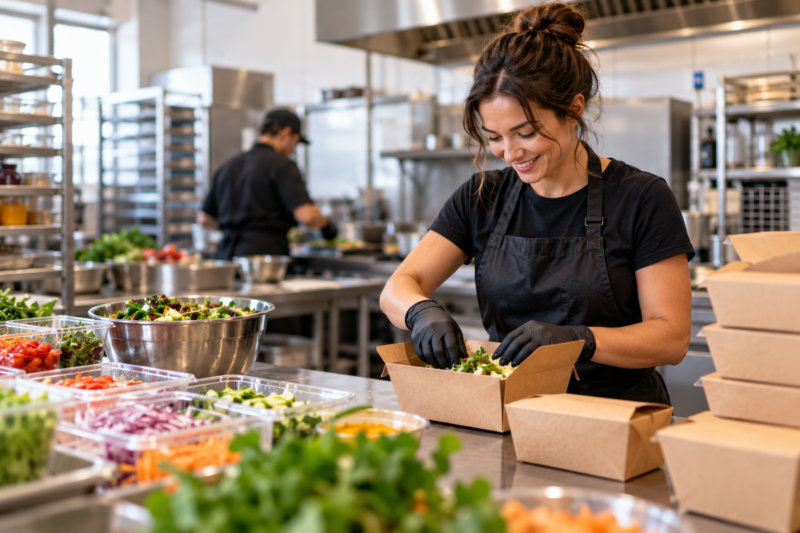
Why Shared Commercial Kitchens Can Make Starting a Food Business More Affordable
The biggest financial advantage of a shared commercial kitchen is simple: multiple businesses can use professional infrastructure instead of each entrepreneur paying to create an entire kitchen independently.
That matters because the U.S. Small Business Administration (SBA) identifies space, equipment and supplies, utilities, licenses and permits, insurance, inventory, salaries, and marketing among the common costs entrepreneurs need to consider before opening a business.
For food entrepreneurs, many of those expenses can become significant before the first customer ever places an order.
What Startup Expenses Can a Shared Kitchen Help Reduce?
A shared kitchen can reduce or eliminate the need for some of the largest upfront investments associated with creating a private commercial kitchen.
Depending on the facility and membership arrangement, entrepreneurs may gain access to resources such as:
- Commercial ovens, ranges, and cooking equipment
- Stainless-steel preparation areas
- Refrigeration and freezer space
- Dry storage
- Sinks and sanitation infrastructure
- Commercial ventilation
- Prep and production equipment
- Utilities associated with the facility
- Cleaning and waste-management infrastructure
The USDA Agricultural Marketing Service describes community kitchens as shared-use commercial kitchens where food entrepreneurs can prepare and process products for commercial sale in a licensed and certified environment.
Instead of purchasing and installing every piece of equipment yourself, a shared-kitchen arrangement lets you access existing infrastructure. That can transform a large capital expense into a more manageable operating expense.
How Does a Shared Kitchen Help You Avoid a Costly Buildout?
Building a commercial kitchen involves much more than buying appliances. The space has to function safely and efficiently, and construction or renovation can require substantial capital.
The USDA notes that food facility construction projects can require major capital investment. Entrepreneurs considering their own facilities may need to account for layout, electrical capacity, plumbing, ventilation, refrigeration, food-safe surfaces, equipment installation, and other infrastructure.
With a shared kitchen, much of that work has already been completed by the facility operator.
That means a startup can focus its initial budget on expenses that directly support sales and growth, such as:
- Ingredients and inventory
- Packaging and labeling
- Business licenses and permits
- Insurance
- Branding and marketing
- Staff or contract labor
- Delivery and distribution
- Customer acquisition
Avoiding a major buildout can also reduce risk. If your business model changes after launch, you are not necessarily stuck with a kitchen designed around your original production plan.
Can You Start Small and Increase Kitchen Use as You Grow?
Yes. One of the major financial advantages of shared kitchens is the ability to match kitchen use more closely to actual production needs.
USDA research into shared kitchens illustrates how entrepreneurs use these facilities at different levels of production. In a survey of 179 shared-kitchen businesses, 69% reported spending 40 hours or less per month producing in a shared kitchen. The same USDA research found that more than half of respondents considered the business they operated from a shared kitchen their primary occupation.
This flexibility can be particularly valuable during the startup stage. Instead of paying for a full-time commercial space before demand is established, an entrepreneur can start with the capacity needed to fulfill current orders.
As sales increase, the business can evaluate whether it needs more kitchen time, storage, staff, or production capacity based on actual demand.
That approach also gives owners an opportunity to test important assumptions. Which menu items sell best? How long does each production batch take? How much storage is actually necessary? How many orders can the team handle?
Real operating data can lead to smarter investment decisions later.
Why Does Preserving Startup Capital Matter?
Keeping more cash available gives a new food business greater flexibility to handle operating expenses and unexpected challenges.
The SBA recommends separating startup costs into one-time expenses and ongoing monthly expenses to understand how much capital a business will need. This is important because purchasing equipment is only one part of the financial picture. New businesses also need enough working capital to continue operating while sales develop.
Cost control is especially important in the current restaurant environment. In July 2026, the National Restaurant Association reported that total restaurant expenses had risen 36% compared with pre-pandemic levels, putting continued pressure on profitability.
A shared kitchen does not eliminate food, labor, packaging, licensing, insurance, or marketing expenses. What it can do is help entrepreneurs avoid tying up as much capital in a private facility before the business has proven its revenue potential.
The money preserved can instead support the areas that help generate customers and repeat business.
Is a Shared Kitchen Cheaper Than Leasing Your Own Commercial Space?
For many early-stage food businesses, a shared kitchen can be more financially manageable because the cost of the facility and its infrastructure is distributed among multiple users.
Whether it is ultimately cheaper depends on your production volume, required equipment, storage needs, rental rates, and how frequently you use the kitchen.
Before choosing a facility, compare the total cost rather than the hourly rate alone. Ask about:
- Minimum rental commitments
- Equipment included with kitchen access
- Refrigerated, frozen, and dry storage fees
- Cleaning requirements and fees
- Available production hours
- Insurance requirements
- Deposits or membership fees
- Included utilities
- Additional equipment charges
USDA research found that shared-kitchen entrepreneurs used a range of additional facility resources, with 69% using dry storage, 59% using refrigerator space, and 44% using freezer space. These features can be valuable when comparing a shared facility with the cost of obtaining and maintaining equivalent resources independently.
The goal is not simply to find the lowest rental rate. It is to find the kitchen arrangement that gives your business the resources it needs without paying for space and equipment it does not.
Frequently Asked Questions About Shared Kitchen Costs
Do shared kitchens provide commercial kitchen equipment?
Many do. Equipment varies by facility, so entrepreneurs should confirm exactly what is included, what requires an additional fee, and whether the available equipment fits their production process before signing an agreement.
Do I still need licenses and permits when using a shared kitchen?
Yes. Renting space in a shared kitchen does not automatically satisfy every requirement for operating your individual food business. Required permits, licenses, food-safety training, insurance, and certifications vary by location and the type of food you produce.
Are shared kitchens only for brand-new food businesses?
No. Shared kitchens can support startups as well as established caterers, bakers, meal-prep businesses, food trucks, packaged-food companies, private chefs, and other operators that need additional production capacity without opening another private facility.
When should I consider moving from a shared kitchen to my own facility?
Consider private space when your production volume, scheduling requirements, storage needs, staffing, or equipment requirements make dedicated space financially and operationally practical. Use actual sales, expenses, and kitchen utilization to make the decision rather than assuming every growing food business needs its own facility.
Spend More on Growing Your Business, Not Building a Kitchen
For a food entrepreneur, every startup dollar matters. A shared commercial kitchen can help reduce the financial barrier to launching by providing access to professional space, equipment, storage, and infrastructure without requiring you to create everything from scratch.
More importantly, shared kitchens offer flexibility. You can build your customer base, refine your products, understand your production needs, and make future investments using real business data.
Ready to lower the barrier to launching or growing your food business? Contact The Cookline to learn how our shared commercial kitchen can give you the professional space and flexibility you need to get cooking.