
How Do Caterers Use Shared Kitchens to Prepare for Large Events?
Caterers use shared commercial kitchens to prepare large events by accessing professional equipment, larger prep areas, cold storage, and licensed food production space without the cost of owning a private facility. This allows catering businesses to increase production capacity, maintain food safety standards, organize logistics efficiently, and scale for weddings, corporate events, festivals, and private parties while keeping overhead costs manageable.
For many catering businesses, growth depends on having the right kitchen infrastructure. At The Cookline, we provide flexible commercial kitchen space that helps caterers confidently handle everything from intimate gatherings to large-scale events. Our licensed, fully equipped kitchens are designed to support food entrepreneurs who need professional facilities without the financial commitment of building their own commercial kitchen. Whether you’re preparing hundreds of plated meals or assembling boxed lunches for a corporate event, having access to the right workspace makes all the difference. Our commitment is to help caterers operate efficiently, stay compliant, and focus on delivering exceptional food and service to every client.
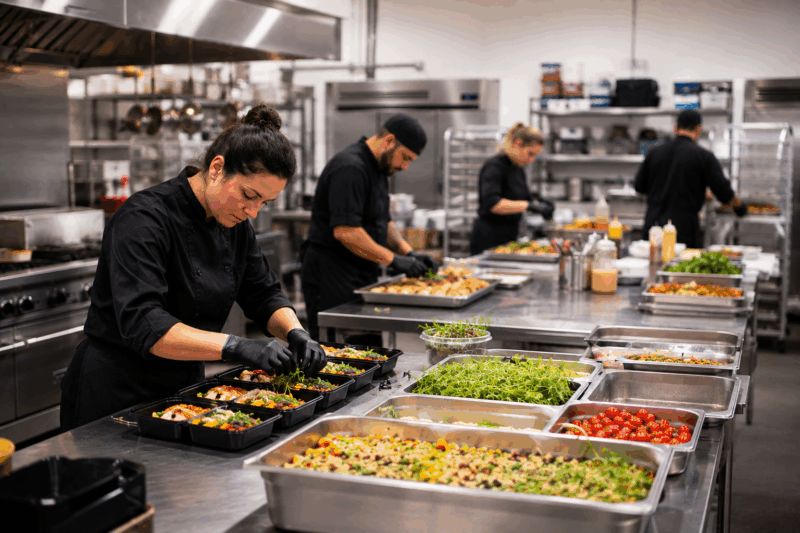
Benefits of Shared Commercial Kitchens for Catering Businesses
Why do caterers choose shared kitchens instead of owning their own?
The biggest advantage is flexibility. Shared commercial kitchens give caterers access to professional facilities only when they need them, eliminating the high costs associated with leasing, maintaining, and equipping a private kitchen.
Benefits include:
- Commercial-grade ovens, ranges, and prep stations
- Walk-in refrigerators and freezer storage
- Licensed food production space
- Flexible scheduling
- Lower operating costs
- Room to expand during busy seasons
According to the USDA Agricultural Marketing Service, shared kitchens help reduce barriers for food businesses by providing affordable access to commercial facilities while supporting business growth. More than half of surveyed operators said their food business is their primary occupation, highlighting how these kitchens support full-time businesses.
How do shared kitchens help caterers manage large events?
Shared kitchens allow caterers to prepare high volumes of food in an organized, efficient environment before arriving at the event venue.
For large events, caterers typically use shared kitchens to:
- Prep ingredients days in advance.
- Cook large batches using commercial equipment.
- Package and organize food for transport.
- Store ingredients safely in commercial refrigeration.
- Coordinate staff before loading vehicles.
Having dedicated prep space also reduces bottlenecks, allowing multiple team members to work simultaneously without overcrowding.
What equipment makes the biggest difference?
Commercial equipment dramatically improves both speed and consistency.
Most caterers rely on:
- Large convection ovens
- Commercial stovetops
- Stainless steel prep tables
- Industrial mixers
- Walk-in coolers
- Food warming equipment
- Dry storage shelving
Instead of adapting residential appliances for commercial production, caterers can prepare hundreds of servings while maintaining consistent quality.
Can shared kitchens help caterers grow their business?
Yes. Shared kitchens make it easier to accept larger bookings because they increase production capacity without significantly increasing overhead.
This allows caterers to expand into services such as:
- Weddings
- Corporate catering
- Holiday parties
- School and nonprofit events
- Meal delivery programs
- Festival food production
According to Grand View Research, the U.S. catering market is expected to continue growing through 2030. The report also notes that corporate catering remains one of the industry’s fastest-growing segments, creating new opportunities for catering businesses prepared to scale.
Best Practices for Catering Large Events
How can caterers stay organized during high-volume production?
Preparation begins long before event day.
Successful caterers often follow these practices:
- Create detailed production schedules.
- Prep ingredients several days ahead.
- Label every container clearly.
- Separate hot and cold storage.
- Assign team members to specific stations.
- Double check transportation timelines.
- Prepare backup supplies for unexpected needs.
Working from a professional shared kitchen makes each of these steps easier because everything is designed for commercial food production.
Why food safety matters even more for large events
Large events involve greater food volumes, longer transportation times, and more complex logistics.
Using a licensed commercial kitchen helps caterers:
- Meet local health department requirements.
- Maintain proper food temperatures.
- Reduce cross contamination risks.
- Improve sanitation procedures.
- Build client confidence.
Professional kitchen environments support consistent food safety practices that become increasingly important as catering businesses grow.
Frequently Asked Questions
Do caterers need a commercial kitchen?
In most cases, yes. Businesses preparing food for sale beyond certain home-based exemptions typically need access to a licensed commercial kitchen that complies with local health regulations.
Is renting a shared kitchen cheaper than owning one?
Yes. Shared kitchens eliminate many expenses associated with leasing private space, purchasing equipment, utilities, and ongoing maintenance. Businesses only pay for the time and resources they need.
Can new catering businesses use shared kitchens?
Absolutely. Shared commercial kitchens are ideal for startups because they allow new caterers to build a client base before investing in their own facility.
What types of events can shared kitchens support?
Shared kitchens can support everything from small private dinners to weddings, corporate events, nonprofit galas, festivals, holiday parties, and large meal prep operations.
Ready to Grow Your Catering Business?
Whether you’re preparing meals for your first wedding or managing multiple large events every weekend, having the right commercial kitchen can help your business operate more efficiently and confidently. The Cookline provides flexible shared kitchen space designed for caterers who want to scale without taking on the expense of a private facility.
Ready to simplify your event preparation and grow your catering business? Contact The Cookline today to learn more about our commercial kitchen memberships and flexible scheduling options.